

How To Boost Your HVAC System Performance
A well-performing HVAC system does more than just heat and cool your home — it keeps humidity in check, maintains consistent temperatures room to room, and does it all without driving your energy bills through the roof. But over time, even a quality system can start underperforming, especially in Calvert County’s demanding mix of humid summers and damp winters.
The good news: most performance issues are fixable, and many improvements don’t require replacing your entire system. Here’s how to get your HVAC system running at its best.
1. Stay on Top of Filter Changes
It’s the simplest fix on this list, and also one of the most impactful. A dirty air filter restricts airflow, forcing your blower motor to work harder while reducing the amount of conditioned air actually reaching your living space. Over time, this reduces performance, increases energy use, and can even freeze evaporator coils in your AC system.
What to do: Check filters monthly and replace them every 1-3 months, depending on your system, household size, and whether you have pets. Homes near the Bay may need more frequent changes due to higher ambient humidity and airborne particles.
2. Clean and Clear Your Outdoor Unit
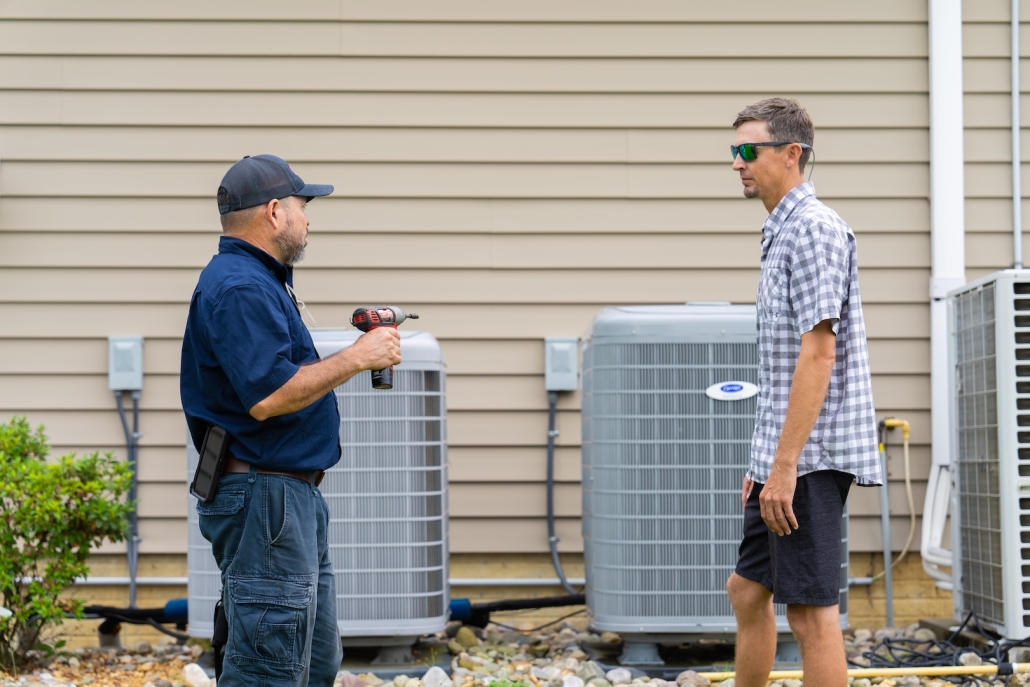
Your outdoor condenser unit needs adequate airflow to release heat effectively. Grass clippings, leaves, dirt, and even spider webs can build up on the coils and restrict performance. In Calvert County’s coastal environment, salt air and humidity can accelerate corrosion and grime buildup even faster than in drier regions.
What to do: Keep at least two feet of clearance around your outdoor unit, gently hose off visible debris from the coils, and trim back plants or grass encroaching on the unit. For a deeper coil cleaning, a professional service is the safer option.
3. Seal and Insulate Your Ductwork
Even a high-efficiency system can’t perform well if a large share of your conditioned air is escaping through leaky or poorly insulated ducts before it reaches your rooms. This is especially common in older Calvert County homes with ductwork running through unconditioned attics or crawl spaces.
What to do: Have a professional inspect accessible ductwork for leaks, gaps, or disconnected sections. Sealing and insulating ducts can noticeably improve both comfort and efficiency without touching the HVAC unit itself.
4. Upgrade to a Smart or Programmable Thermostat
Manual thermostats often lead to wastes energy—cooling or heating an empty house at full blast, or forgetting to adjust settings before bed. A programmable or smart thermostat automatically adjusts temperatures based on your schedule, reducing unnecessary system runtime while keeping your home comfortable when it matters.
What to do: Set a program that reduces heating or cooling when you’re away or asleep, and consider a smart thermostat that learns your habits over time for even more precise performance.
5. Schedule Professional Maintenance Twice a Year
Nothing improves HVAC performance more reliably than routine professional maintenance. A tune-up covers refrigerant levels, electrical connections, coil cleanliness, blower components, and — for heating systems — combustion safety and efficiency. Small issues caught during a maintenance visit, like a slightly low refrigerant charge or a worn belt, can quietly drag down performance without obvious symptoms.
What to do: Schedule AC maintenance in spring and furnace maintenance in fall, ideally before peak season hits and before Calvert County’s humidity or cold snaps put maximum strain on your system.
6. Improve Airflow Throughout Your Home
Blocked or closed vents, furniture placed in front of registers, and closed interior doors can all disrupt the balanced airflow your system is designed to deliver. This forces certain rooms to work harder to reach temperature while others may be overcooled or overheated.
What to do: Keep vents and returns unobstructed, avoid permanently closing vents in unused rooms (which can unbalance system pressure), and leave interior doors open when possible to help air circulate.
7. Address Humidity Separately From Temperature
Because Calvert County sits right on the Chesapeake Bay, humidity is a year-round factor that affects how “hot” or “cold” your home feels regardless of the thermostat reading. A system fighting excess humidity has to run longer to deliver the same comfort level, which can look like poor performance even when the equipment itself is working correctly.
What to do: Consider a whole-home dehumidifier paired with your HVAC system, especially if you notice persistent mugginess in summer or condensation on windows in winter. Managing humidity separately takes pressure off your AC and furnace alike.
8. Check for Proper System Sizing
If your HVAC system short-cycles (turning on and off frequently) or runs constantly without ever quite reaching your set temperature, sizing could be the root issue rather than a performance problem you can fix with maintenance alone. An oversized system short-cycles and struggles with humidity removal; an undersized system runs nonstop and still can’t keep up.
What to do: If you suspect a sizing mismatch, ask a professional for a proper load calculation based on your home’s square footage, insulation, and window exposure — not just a rule-of-thumb estimate.
9. Replace Aging Components Before They Fail
An HVAC system doesn’t need a full replacement to see a performance boost. Sometimes a single aging component — a weak capacitor, a worn blower motor, corroded electrical contacts — is quietly limiting the whole system’s performance. Replacing these targeted parts can restore performance without the cost of full equipment replacement.
What to do: Ask your technician during a maintenance visit whether any specific components show signs of reduced performance or are nearing the end of their expected lifespan.
10. Know When It’s Time to Upgrade
If your system is more than 12-15 years old, requires frequent repairs, or simply can’t keep up no matter how well it’s maintained, it may be reaching the end of its useful, efficient life. Modern high-efficiency systems perform significantly better than older models, particularly in demanding, humid climates like Calvert County’s.
What to do: Ask for a professional assessment comparing the cost of continued repairs against the long-term savings and performance gains of a system upgrade.
Quick Performance Checklist
- Replace filters every 1-3 months
- Keep outdoor unit clear of debris and vegetation
- Inspect ductwork for leaks or disconnections
- Install a programmable or smart thermostat
- Schedule professional maintenance each spring and fall
- Keep vents and returns unobstructed
- Consider a whole-home dehumidifier for year-round humidity control
- Confirm your system is properly sized for your home
- Address aging components before they fail
- Get a professional opinion if repairs are becoming frequent
Get a Professional Performance Check
Every home is different, and the fastest way to boost your HVAC system’s performance is a hands-on assessment from a technician who knows your equipment and understands Calvert County’s unique climate demands.